

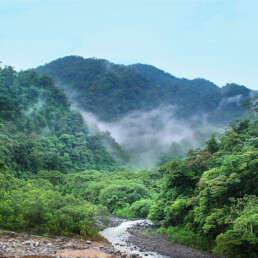
Restoring a Lost Legacy: Giant Tortoises Return to Floreana
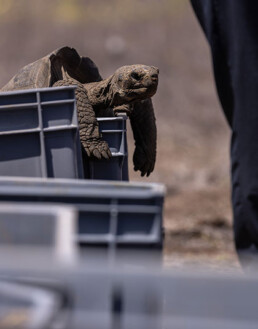
This World Wildlife Day, we celebrate a landmark conservation milestone: the return of the Floreana giant tortoise to its ancestral home on Floreana Island in the Galápagos. Our partners at Fundación Jocotoco, working alongside the Galápagos National Park Directorate, Charles Darwin Foundation, Galápagos Conservancy, and Galapagos Conservation Trust, have achieved what once seemed impossible: reintroducing a species declared extinct more than 150 years ago.
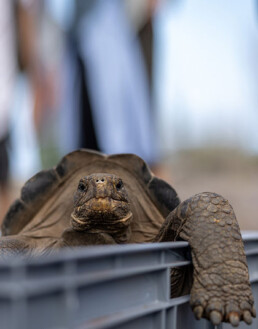
photos above: Marlon del Aguila
From Extinction to Restoration
The Floreana giant tortoise (Chelonoidis niger niger) was driven to extinction in the 1840s by whalers who removed thousands of tortoises as a living food supply during long voyages. Yet the story did not end there. In 2008, researchers discovered tortoises on Wolf Volcano on Isabela Island carrying Floreana ancestry.
In 2017, a targeted “back-breeding” program began with 23 hybrid tortoises genetically closest to the original Floreana lineage. By 2025, more than 600 hatchlings had been born, and 158 juvenile tortoises have now been returned to Floreana—marking a decisive step in restoring the island’s ecological integrity.
Breeding alone is not conservation success. Without eliminating invasive predators such as rats and feral cats, reintroduction efforts would fail. Beginning in 2023, a large-scale invasive species eradication program cleared most of these threats from Floreana, creating the conditions necessary for native wildlife to recover. Early signs are promising: native birds, reptiles, and invertebrates are already rebounding.
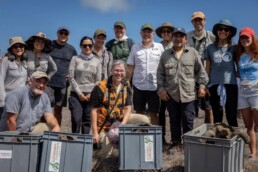
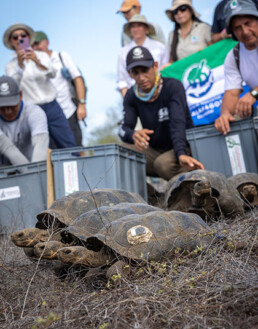
ICF’s David Agro (bottom left) joins the Jocotoco team for the release of the Floreana Giant Tortoise
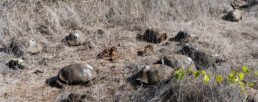
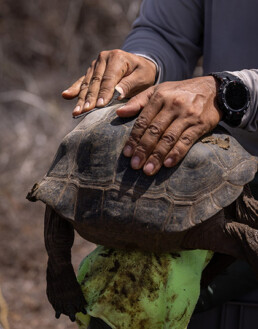
Tortoises released with satellite transmitters on their backs. photo: Bryan Perez
Ecological Engineers and Umbrella Species
Giant tortoises are keystone ecological engineers. Through grazing, seed dispersal, and the creation of wallows and microhabitats, they shape vegetation structure and maintain open habitats that countless other species depend on. Learn More
They are also an umbrella species. Protecting and restoring the Floreana tortoise requires landscape-scale habitat recovery, invasive species control, and long-term monitoring—actions that benefit many other threatened species, including the Floreana mockingbird, the Floreana racer snake, and endemic finches and reptiles.
The return of the Floreana tortoise is more than a species reintroduction. It is the rebuilding of ecological processes, the restoration of an island’s natural heritage, and proof that long-term, science-driven collaboration between NGOs, researchers, park authorities, and local communities delivers measurable results.
A powerful story to share on World Wildlife Day.
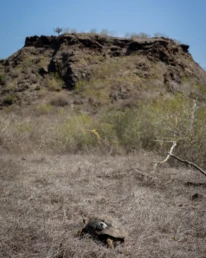
photo: Marlon del Aguila