
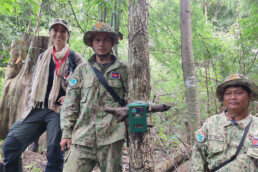
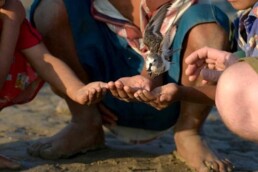
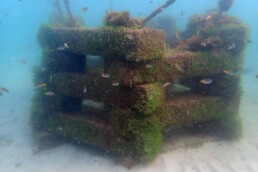
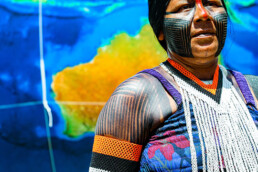
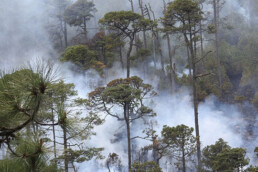
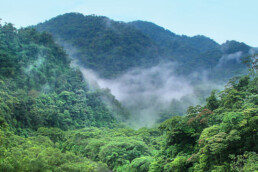
Our small ICF team can act swiftly, without a large bureaucracy, to respond to urgent conservation needs.
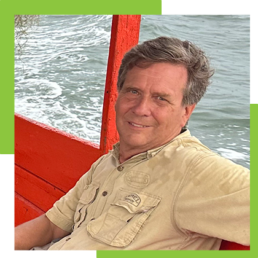
Doug Bender
President
Doug Bender is retired from a 36-year career as a spacecraft engineer at Boeing, where he was Chief Engineer for Flight and Control of Boeing’s unmanned space programs. Doug holds a PhD in Electrical Engineering from University of California at Santa Barbara. Since retiring, Doug has changed focus, volunteering at ten distinct conservation projects in as many countries, some multiple times. He is a technical advisor to Ikh Nart Nature Reserve in Mongolia and to Marine Conservation Cambodia, which he has visited over 10 times so far.
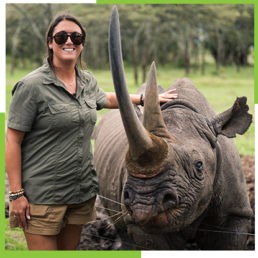
Chelsea Donohue
Treasurer
Chelsea Donohue is a travel advisor, entrepreneur, and wildlife photographer focusing on conservation-driven travel and global ecosystems. As the founder of Chelax Adventures, she designs immersive travel experiences that connect travelers with wildlife, natural landscapes, and local communities across the world. She has extensive firsthand experience in conservation-focused travel, including time spent living and working in South Africa’s Greater Kruger region and participating in wildlife conservation programs. Through her photography and storytelling, she aims to foster a deeper understanding of biodiversity and the importance of protecting natural habitats. With over 20 years of experience in accounting and financial management, she brings a strong foundation in strategic planning, operational oversight, and sustainable business practices, supporting long-term impact in mission-driven organizations.

Diana Papoulias
Clerk
Diana Papoulias retired in 2014 after a 25-year career as a research scientist with the U.S. Geological Survey’s Columbia Environmental Research Center where she studied the effects of contaminants on the aquatic environment. Concerned about the effects of extractive industries on indigenous lands and peoples, she subsequently joined the non-profit E-Tech International to train environmental monitors to protect their native lands in Peru and Ecuador and to provide environmental expertise towards remediation efforts of petroleum-contaminated lands. She currently is science advisor for E-Tech Peru. Diana has a Master’s Degree from Arizona State University and a Ph.D in Fisheries and Wildlife from the University of Missouri.
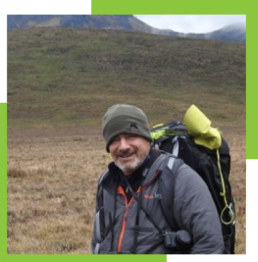
David Agro
Director
David is an architect and conservationist based in Toronto. His science background has led him to work on award-winning design projects relating to scientific and environmental research, education, and interpretation. David’s interest in tropical conservation arose from ornithological work at the Academy of Natural Sciences in Philadelphia. The dramatic discovery of a new species of Antpitta during fieldwork in Ecuador led to the formation in 1998 of Fundación Jocotoco, of which David is a founding board member. Since recently stepping down as Jocotoco’s president, David helps ICF develop new programs and support for same.
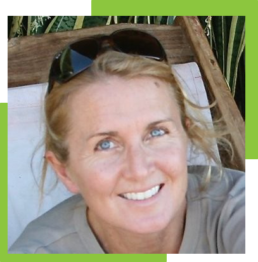
Molly Bartlett
Director
Molly Bartlett is an environmental lawyer with decades of executive experience in community based international conservation. She has substantial experience in biodiversity conservation in terrestrial and marine ecosystems delivered through local organizations in Africa, Latin America and Asia. She has held senior executive positions non-profit organizations including the International Conservation Fund of Canada and the Clinton Foundation’s Climate Initiative. Molly has an MSc. in molecular biology and a degree in environmental law.

Jerry Bertrand
Director
Jerry Bertrand is an Environmental Advisor to Permian Global and was science advisor to the executive offices of Presidents Nixon, Ford and Carter. He was head of International Affairs for the US Fish & Wildlife Service where his portfolio included setting up new parks and reserves in Asia, Africa and Latin America. He was Chairman of BirdLife International, President of Massachusetts Audubon Society, and he co-founded World Land Trust. Jerry has an MS and PhD in marine science and oceanography and holds a degree in environmental law.

Philip Borden
Director
Trained in history, mathematics, political theory, and management in the U.S. and at Oxford, Dr Borden left an academic career to found ventures in artificial intelligence, advanced manufacturing, electronic design, and image processing. He then turned to nonprofit economic development, specializing in small business growth, financing, and racial/ethnic/gender equity. He helped establish several business and civic organizations, taught MBA nonprofit management, and served on nonprofit boards. He has consulted widely and authored over 100 professional and popular presentations and publications.
A Board Member's Journey
Phil's Journey to International Conservation Fund
My journey begins with Doug Bender — but is nothing like his.
I met Doug when both of us, retired, worked on national politics, even helped to fund an activist organization together. We stayed in contact and he invited me to an early version of his journey video. After many long conversations, I agreed to travel to Cambodia with him to see ICF's work at ground level. Two projects I reviewed there convinced me that ICF was an organization worth becoming involved with.
The effectiveness and importance of ICF's Cambodian projects surprised and delighted me. The mutually supportive relationship between the contractors and ICF facilitated the scientific and social success of the projects. The degree to which they made such near-instantaneous environmental impact with so little investment convinced me to apply to become a board member.
But why the surprise — and what could I hope to add?
Conservation has always been an interest of mine, but secondary to others. My university and graduate school training encompassed mathematics, politics, and history, not biology. I had retired from a career in academia, technology entrepreneurship, and nonprofit leadership. It was a long, varied career, taking me around the U.S. and abroad. I had never witnessed a conservation field project before Cambodia. I felt I might add organizational experience and perhaps savvy as a board member.
During my retirement I had served on nonprofit boards in economic development and the arts, and sat with dying patients and their loved ones for non-profit hospices, and continued to write on history- and science-related topics. Changing my major focus to environmental action has caused me to re-educate myself and re-evaluate what — and how much — I could accomplish.
My journey to ICF has been joyous because:
- ICF is a volunteer organization. Everyone's commitment is total. Board and staff buy into the mission in a direct and enthusiastic way — sometimes they even share roles and duties.
- ICF wholly focuses on local actions. We make certain that every field partner comes from the people it serves and has full community understanding and buy-in.
- ICF makes funding decisions quickly but effectively. Its "see it, love it, do it" philosophy remains unencumbered by the burdensome bureaucratic overhead of similar environmental organizations.
- ICF expertly selects the right local partners to fund, evaluates their effectiveness, and tracks their results.
That journey may be more pedestrian than any other board member's. It is also likely more relevant to the experiences of most people who lack the sophisticated environmental awareness of the board's distinguished environmental and conservation scientists.
Please join us in our quest — whether through dollars, labor, or just plain encouragement. You will fall in love with ICF, too.
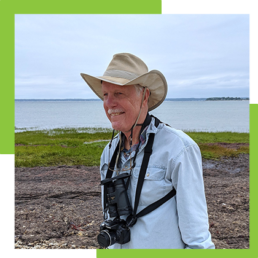
Meade Cadot
Director
Meade Cadot is Naturalist Emeritus at the Harris Center for Conservation Education, where he earlier served for 33 years as Executive Director, overseeing the creation of the 35,000-acre SuperSanctuary of connected protected lands. Meade also served as a faculty member in Antioch University New England’s Environmental Studies Department for 34 years. He has received numerous lifetime awards for his work in conservation and education.
A Board Member's Journey
Meade's Journey to International Conservation Fund
I grew up in rural, unincorporated Greenville, Delaware — and in those years my hiking buddies were beagles.
I had no neighbors in my elementary and middle-school years, so the beagles came along. My father had been a bird watcher since childhood and kept a feeder list for decades, so I too became a bird watcher and started keeping bird lists by about the age of 10. In the 1950s, the habitat in our neighborhood was pretty good.
When my mother and I drove my father to the bus stop on his way to Wilmington — where he was a chemical engineer for the DuPont Company — there were two-lane roads, a railway station, a gas station, and a lumber yard. By the 1960s that same intersection had at least four lanes, a couple of strip malls, and the new elementary school I attended. And on the way there, my favorite birding meadows and woods were being "fragmented" by housing developments.
My folks worried about the employment future of their bird-brained child, who was not doing nearly as well with schoolwork as with bird record-keeping. So I was sent to boarding school in Tidewater Virginia (Christchurch Episcopal), where I was a "closet" bird watcher — and finished third in my class.
I went on to Washington and Lee University, majoring in biology — essentially pre-med back then, as no "environmental" or "conservation biology" degree existed in the early '60s. For my degree I had to take another science, physics or geology. Math was never my strong suit, so I took geology — and was struck that classes actually took place in the field. So I decided that, with a biology degree, I should try being a geologist.
The one university that would both accept me and cover grad-school tuition was the University of Kansas. I spent the better part of a decade enrolled there, though often not in town — and soon realized rocks were nowhere near as interesting as living things. Fortunately I studied under Prof. Roger Kaesler, a "soft-rocker" interested in critters in carbonate rocks, in particular Ostracodes ("bean shrimp"). That led to a summer NSF traineeship at the Bermuda Biological Station (1967) and a fellowship at the Woods Hole Oceanographic Institute (1968), then just beginning a joint degree program with M.I.T.
That put me aboard two National Science Foundation oceanographic cruises. In 1969 I sailed on the Eltanin from Melbourne, south through the Southern Indian Ocean nearly to the Antarctic Circle, and back. Two years later I was aboard the RS/V Hero, sailing from Punta Arenas, Chile through the Straits of Magellan — à la Darwin's voyage of the Beagle — researching how temperature and depth affect the substitution of magnesium for calcium in Ostracode shells.
Escaping an air-condition-less Washington summer, I headed north to my aunt and uncle's old farmhouse above Newfound Lake in New Hampshire. There I had my first close encounter with a forest carnivore entirely new to me — a Fisher. That encounter got me thinking I might like to live and work in New Hampshire.
Through my aunt I met New Hampshire Audubon's first executive director, Tudor Richards, and I asked for — and was given — the director's job at a nearby Audubon nature center. I told Tudor that if he'd offer me a year-round position, I'd put my push for a Ph.D. on hold and work as a naturalist. He offered me a one-year post at Willard Pond Sanctuary near Hancock, NH, so I moved there, built an outreach program with the local schools, laid out nature trails, and led outings.
That led to part-time, year-round work with both the fledgling Harris Center for Conservation Education and Antioch Graduate School's Master of Science Teaching program — jobs I held for more than three decades. (Thinking a finished Ph.D. might help my longevity, I took a leave in the fall of 1984 to complete my University of Kansas geology doctorate, in organism–carbonate sediment inter-relationships.)
A decade into teaching, I developed a course on wildlife habitat and forest management — and in my very first class was Scott Hecker, already deep in shorebird protection and Mass Audubon's Programme for Belize. We kept in touch over the next three decades, during which I envisioned and grew the Harris Center's SuperSanctuary, a 25,000-acre cluster of protected lands. Scott eventually joined the International Conservation Fund of Canada and, with Molly Bartlett, co-founded ICF's U.S. branch. When he moved to Temple, NH — not far from Hancock — he asked me to join his small but mighty fledgling board.
Please join us in our quest — whether through dollars, labor, or just plain encouragement. You will fall in love with ICF, too.

Dexter Mead
Director
Dexter Mead has worked with land and wildlife conservation organizations since 1988, including the Piedmont Environmental Council, National Fish & Wildlife Foundation, Wildlife Habitat Council, and Mass Audubon. Most recently he was the Executive Director of the Dartmouth Natural Resources Trust in Massachusetts for 18 years. Dexter has a Master’s in Environmental Studies from the Yale School of the Environment.
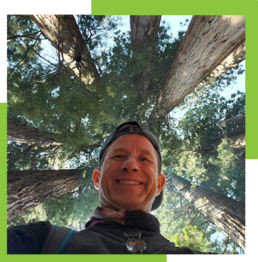
Steve Ringer
Director
Steve manages venture capital investments with 25 years of high-tech business experience. He holds a Master’s degree in Environmental Engineering and an MBA, both from UC Berkeley. He was a co-founder of environmental organizations in college and spent 3 years at the U.S. Environmental Protection Agency working with local governments and Native American Tribes on clean air regulations, permits and policy. As a lifelong advocate of environmental protection and all-around nature lover, Steve is excited to be championing ICF’s mission of protecting nature.
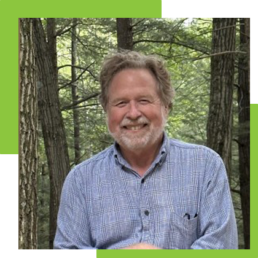
Scott Hecker
Associate, ICF Co-founder
Scott has devoted his career to bird conservation. He completed his M.Sci. degree at Antioch University in 1987 with a focus on the protection of tropical habitats in Belize. His career path followed his dreams as wildlife artist, photographer, writer, natural history tour leader, bird conservationist, college professor, and expert witness in legal cases. He has directed bird conservation programs for the Massachusetts Audubon Society, National Audubon Society, Conservian, Inc, and Biome. Since 2008, Scott has worked with private foundations to support the conservation of nature and protection of indigenous communities in the Americas, Africa, an Asia. He works from his home in the woods in Temple, New Hampshire.
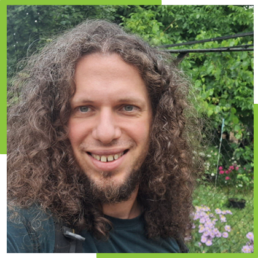
Aleks Evtimov
Head of Communications & Digital Strategy
For the past 16 years, Aleks has been a dedicated advocate for environmental awareness on social media, with a focus on the causes and solutions surrounding deforestation. Throughout his career, he has collaborated with environmental NGOs across Canada, Belgium, Switzerland, and the U.S., building deep experience in the field. Aleks currently supports ICF’s technical and digital initiatives, including website design and social media strategy and content production. His role also extends to producing print materials such as reports, and coordinating content with partner organizations. He holds a bachelor’s degree in law.
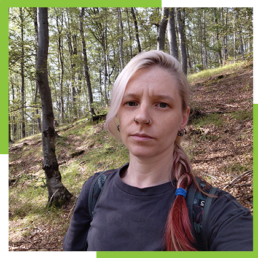
Sandra Debosschere
Associate
Sandra brings extensive experience in the humanitarian sector, having worked with NGOs where she supported finance, accounting, and administrative operations. A lifelong advocate for environmental causes, Sandra currently supports ICF, where she manages the organization’s databases and contributes to a range of administrative functions that keep operations running smoothly. Sandra holds master’s degrees in both History and Economics.