





Calving season has begun — and already, two new North Atlantic right whale calves have been spotted!
Millipede (Catalog No. 3520) and her newborn were seen on December 3rd, about four nautical miles from the mouth of the St. Marys River on the Georgia–Florida line. The first calf of the season was born to a mother with the fittingly celebratory name Champagne.
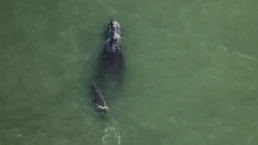
Millipede seen with her third known calf. Photo: Florida Fish and Wildlife Conservation Commission, taken under NOAA permit #26919
These births matter.
With fewer than 400 right whales left on the planet, every calf is vital to the species’ survival.
Scientists estimate that for the population to recover, we need about 50 calves every year for many years in a row. Today, even a year with 20 calves is considered a “good” year. There is a fragile glimmer of progress. After sinking to an estimated low of 358 individuals in 2020, the population has shown slight improvement, with roughly 384 whales estimated in 2024. This doesn’t mean the species is safe — far from it — but it should motivate us to double down on conservation efforts.
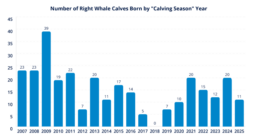
The number of North Atlantic right whale births. Credit: NOAA Fisheries
Human-caused deaths remain the biggest obstacle to recovery.
Collisions and entanglements are the leading killers. Entanglements often cause deep injuries and chronic inflammation, leaving whales to weaken and die slowly from starvation.
Our partners at the Canadian Whale Institute are working on resolving entanglements on two fronts — rescuing entangled whales and collaborating with local fishers to prevent entanglements before they happen. Using the right gear, pulling nets during migration periods, and involving coastal communities directly in the solution are already making a difference.
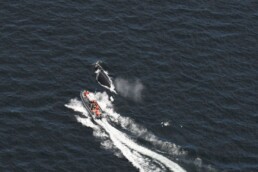
A rescue mission by the Campobello Whale Rescue Team
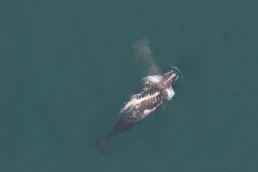
A North Atlantic right whale with propeller scars. Credit: NOAA
If You’re on the Water: Slow Down
Vessel speed is critical. Slower boats mean fewer deadly collisions — and more time to avoid a whale altogether.
NOAA requires vessels 65 feet and longer to travel at 10 knots or less in seasonal management zones from Rhode Island to Florida. Smaller vessels aren’t legally bound by these rules, but NOAA strongly urges everyone to slow down.
Before heading out, check whale safety zones and recent sightings on the NOAA Right Whale Advisory System or the Whale Alert app. It’s a small action that can save a life.
The Right Whale to Save
The North Atlantic right whale earned its name because it was once the “right whale to kill” — slow, curious, and buoyant, making it the perfect target for whalers.
Today, we believe it’s the right whale to save. We are living at the last moment in history when their fate is still in our hands. After whaling pushed this species to the edge, Canadians and Americans now share the responsibility — and the privilege — of protecting this ocean giant.
Join us. Support the heroes at CWI and help keep this progress alive.
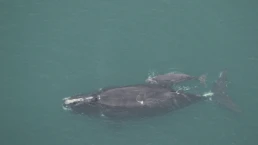
Champagne and her calf were sighted on December 5, 2025, Photo: Clearwater Marine Aquarium Research Institute