
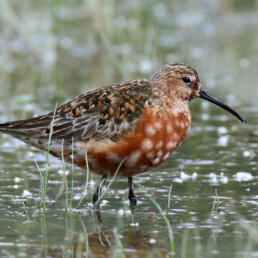






ICF partners with Maca Tobiano to secure a future for the Magellanic Plover, Hooded Grebe, Diademed Sandpiper-Plover, and Fuegian Snipe.
Turning the tide
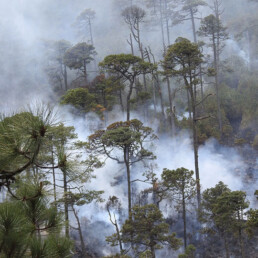
Across Patagonia and the high Andes, these four extraordinary bird species are facing a cascade of pressures: climate instability, invasive predators, habitat degradation, disappearing wetlands. Individually, any of these challenges would be serious. Together, they spell disaster.
But conservation history shows that “hopeless” is often just a starting point.
For more than a decade, Maca Tobiano has been proving that committed people armed with endless passion and good science can turn the tide. Their work combines relentless field effort, deep and ever expanding knowledge of each species, and a willingness to adapt and innovate in some of the harshest environments on Earth.
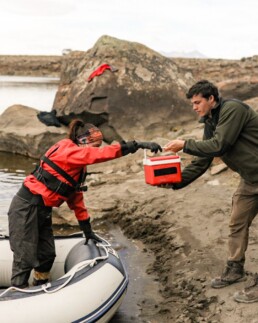

“I saw my first Hooded Grebe in 2009; less than a year later I was committed full time to the conservation of this species. Understanding how humans are affecting them, in order to recover the population, has become my passion.” Kini Roesler, President of Maca Tobiano
Magellanic Plover: Innovation on the Wind-Swept Plateau
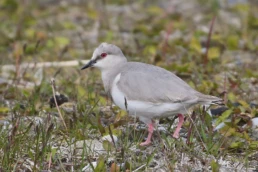
The Magellanic Plover is one of Patagonia’s most elusive and least understood birds—breeding in scattered wetlands across high, wind-lashed plateaus where few species can survive. Its biggest threats are predation, extreme weather, and a profound lack of baseline biological information. For years, conservationists lacked even the basic tools needed to understand how this species moves, breeds, and raises its young.
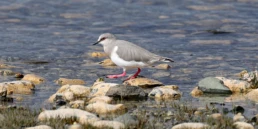
photo: Brendan Ryan
Maca Tobiano is changing that.
To protect nests from predators, the team has been adapting and testing protective enclosures inspired by the successful Piping Plover program—redesigned to withstand Patagonia’s violent storms and shifting conditions. At the same time, banding, camera traps, and targeted behavioral observations are beginning to reveal crucial insights into chick survival, parental behavior, and migration.
This combination of field innovation and scientific groundwork is closing decades-long knowledge gaps. And it’s laying the foundation for what the species has never had before: a comprehensive, data-driven management phase that can scale up nest protection, track movements more precisely, and secure the long-term future of the Magellanic Plover across the Patagonian steppe.
Setting up a predator exclosure to protect the nest of a Magellanic Plover, Learn more about the use and effectiveness of predator exclosures here.
Hooded Grebe: Breakthroughs in a Race Against Time
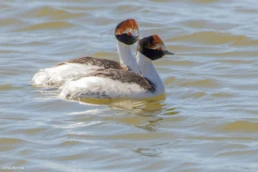
Few birds symbolize Patagonia’s fragility like the Hooded Grebe. Breeding only on remote, windswept volcanic lakes, it faces an unforgiving mix of challenges: invasive predators, unstable water levels, collapsing breeding colonies, and storms strong enough to destroy entire nesting seasons in a single night.
To protect a species this vulnerable, conventional methods weren’t enough. So Maca Tobiano pioneered new ones.

photo: Matias Schinca
Nesting platforms
One of the project’s most important innovations is the anti-wind nesting platform—a floating, stabilized structure designed to give grebes a secure place to build their nests even in extreme Patagonian winds. These platforms have prevented the widespread nest failures that once defined the species’ breeding attempts, giving pairs a chance to hatch and raise chicks under far more stable conditions.
Captive-rearing
At the same time, the team developed a captive-rearing and release program, achieving something unprecedented: raising Hooded Grebe chicks to independence and successfully releasing them into wild groups. This milestone proved that even when natural breeding fails, intervention can keep the species from slipping further toward extinction.
Coupled with ongoing invasive species control, lake protection, and colony monitoring, these innovations mark a genuine turning point. After years of decline, the Hooded Grebe finally has tools on its side—tools capable not only of stabilizing the population, but of rebuilding it.
Diademed Sandpiper-Plover: Protecting Fragile High-Andean Wetlands
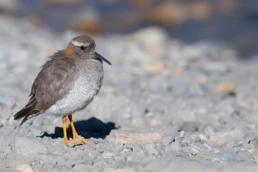
photo: Cristian Pinto Fernandez
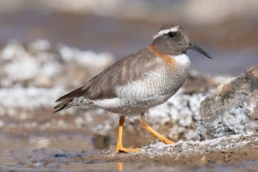
High in the Andes, the Diademed Sandpiper-Plover relies on cushion-plant bogs—rare, delicate wetlands that are rapidly disappearing.
Grazing pressure, mining activity, water extraction, and accelerating climate change are drying these wetlands faster than they can recover. Yet the species remains one of the least studied shorebirds in South America, with major gaps in knowledge about its population size, movements, and breeding success.
Maca Tobiano and partners are working to change that by mapping key wetlands, assessing habitat condition, and coordinating with local communities to balance conservation with traditional land use.
Their goal: safeguard the remaining bogs, restore degraded ones, and generating the knowledge needed to guide long-term protection.

photo: Lalo Pangue
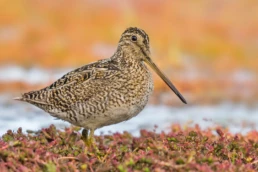
Fuegian Snipe: A Sentinel of Healthy Peatlands
The Fuegian Snipe depends on intact peatlands and high-Andean wetlands.
These ecosystems are among the world’s most pristine, yet also among the most vulnerable. Climate shifts, invasive species, and unsustainable grazing all threaten these habitats, and with them the Snipe’s already scarce populations.
By surveying key sites and working to protect remaining peatland strongholds, Maca Tobiano is positioning the species as a vital ecological indicator: when the Fuegian Snipe thrives, the entire wetland system is healthy. Protecting this bird means safeguarding some of the last truly wild water landscapes of the southern Andes.
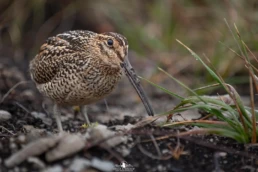
photo: Omar Barrosop
Maca Tobiano and partners are working to change that by mapping key wetlands, assessing habitat condition, and coordinating with local communities to balance conservation with traditional land use.
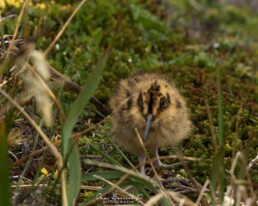
photo: Omar Barrosop