







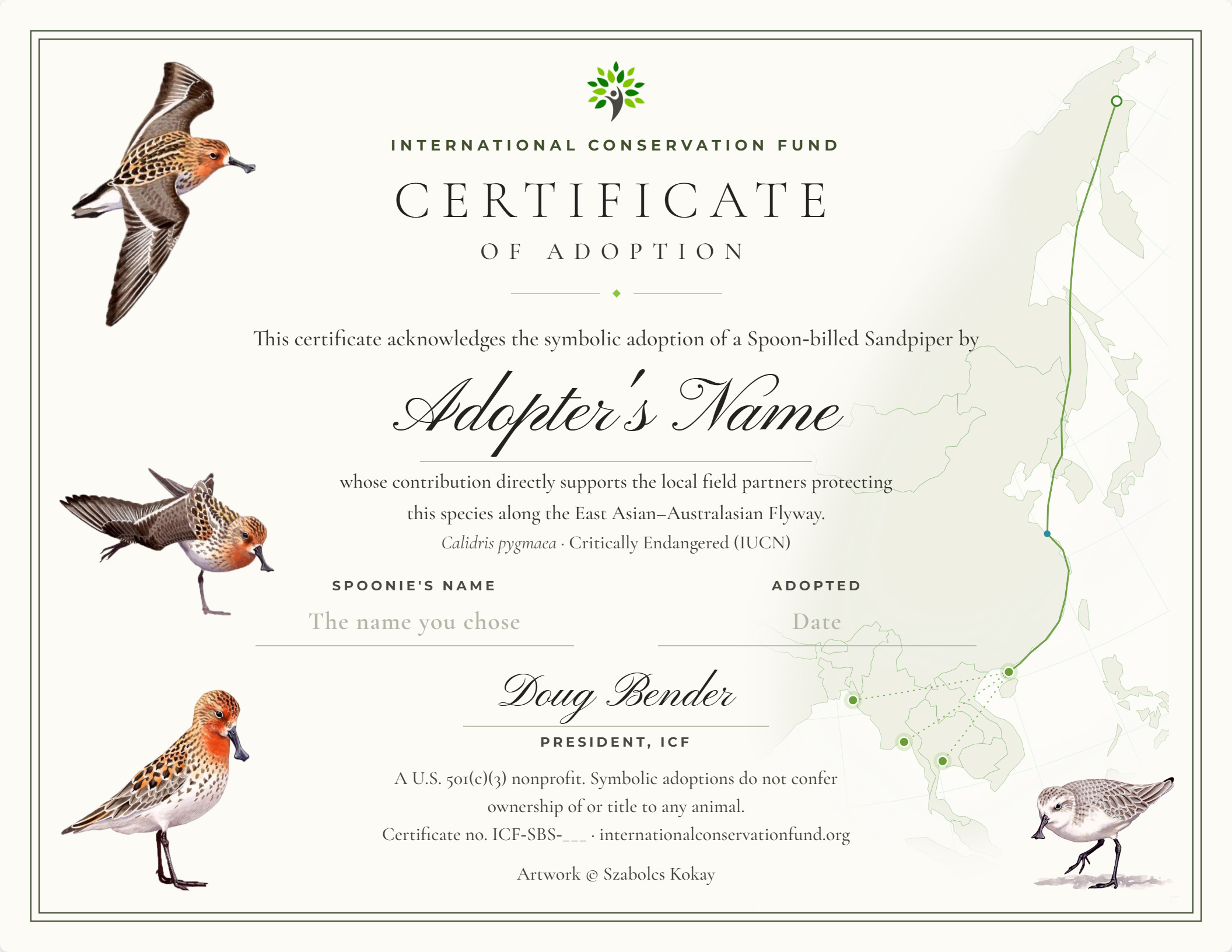
Your adoption roost
Claim your place in the flock

Fewer than 500 spoon-billed sandpipers are left in the world and this flock represents all of them. Your adoption symbolic in name only. Your monthly support funds real, ongoing conservation work protecting Spoonies in the wild.

Your adoption roost
Claim your place in the flock

Fewer than 500 spoon-billed sandpipers are left in the world and this flock represents all of them. Your adoption symbolic in name only. Your monthly support funds real, ongoing conservation work protecting Spoonies in the wild.
Symbolic adoption
What your adoption includes


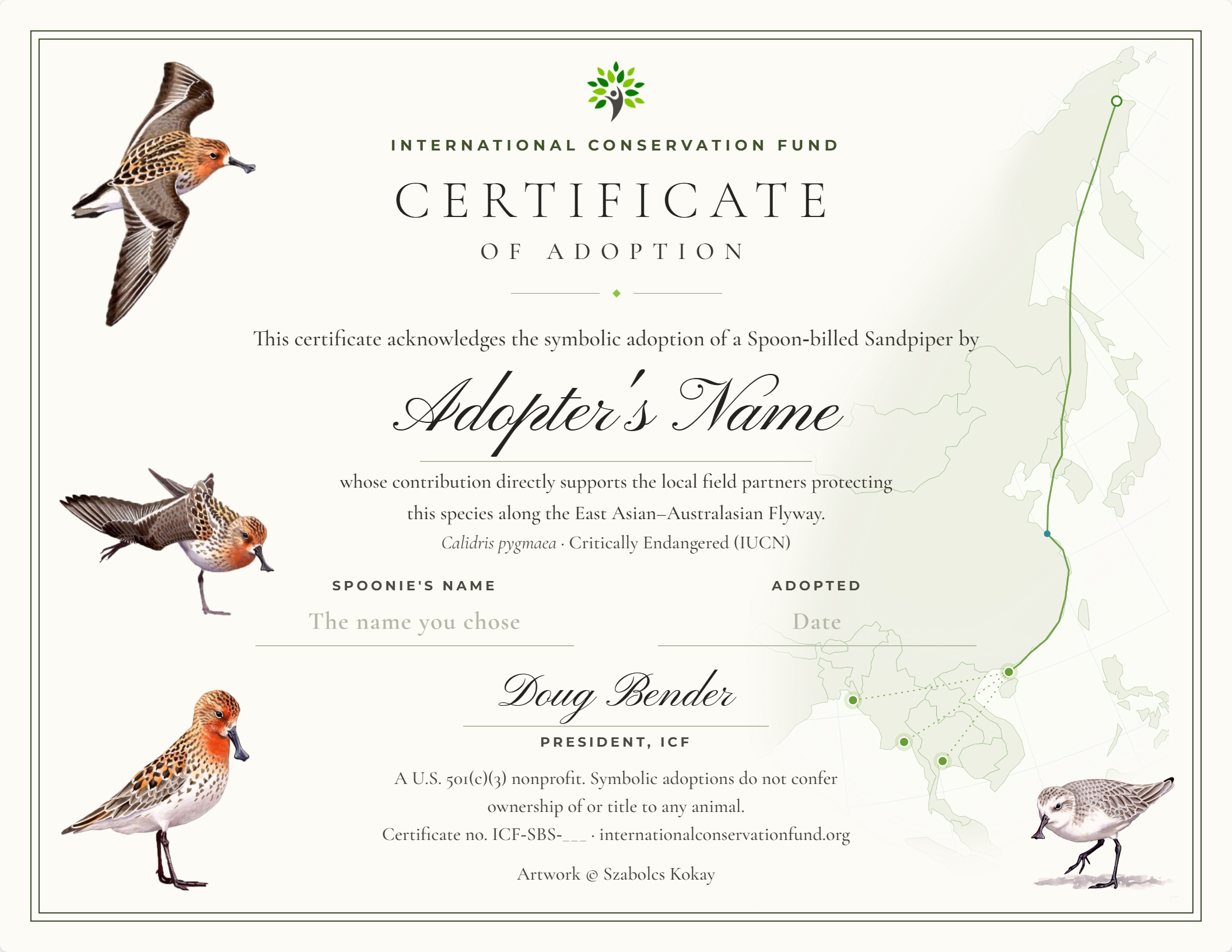
A digital certificate
Naming your bird and its place in the roost — yours to keep, print, or share.

Bi-yearly field updates
Twice a year, dispatches straight from the field partners guarding the flyway — see how the effort is progressing, mudflat by mudflat.

A chance to win a Spoonie painting
When we reach 250 adoptions, one lucky adopter will be randomly chosen to receive an original Spoon-billed Sandpiper painting, hand-painted by Szabolcs Kokay just for this milestone.

A place in the roost
Your bird holds its spot in the roost ring for the length of your adoption, visible to every visitor who comes looking.

This is a symbolic adoption — your contribution funds real field protection, not a physical bird. Gifts are tax-deductible in the U.S. (ICF is a 501(c)3, EIN 83-4647086). We’re capping this flock at 500 adoptions, a solid estimate of the entire adult spoon-billed sandpiper population left on Earth. Want to help beyond the 500? You can always support our SBS field partners directly.

A digital certificate
Naming your bird and its place in the roost — in your language to keep, print, or share.

Bi-yearly field updates
Twice a year, dispatches straight from the field partners guarding the flyway — see how the effort is progressing, mudflat by mudflat.

A chance to win a Spoonie painting
When we reach 250 adoptions, one lucky adopter will be randomly chosen to receive an original Spoon-billed Sandpiper painting, hand-painted by Szabolcs Kokay just for this milestone.

A place in the roost
Your bird holds its spot in the roost ring for the length of your adoption, visible to every visitor who comes looking.

This is a symbolic adoption — your contribution funds real field protection, not a physical bird. Gifts are tax-deductible in the U.S. (ICF is a 501(c)3, EIN 83-4647086). We’re capping this flock at 500 adoptions, a solid estimate of the entire adult spoon-billed sandpiper population left on Earth. Want to help beyond the 500? You can always support our SBS field partners directly.
The route
8,000 kilometers, one flyway

From Arctic tundra to tropical mudflats — every stopover along the way has to hold.
The Spoonie
The secret life of the Spoonie

A glimpse in the life of one of the most mysterious birds on Earth.

All three videos courtesy of the Cornell Lab of Ornithology, taken by Gerrit Vyn.

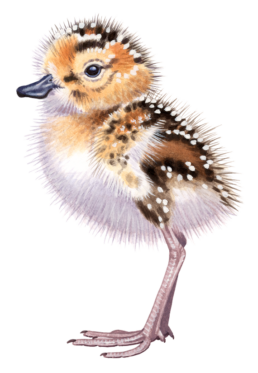
Spoonie chicks. Photo: Pavel Tomkovich
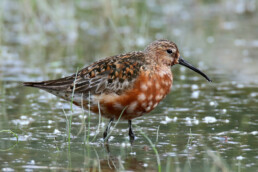
Photo: Daniel Pettersson
The Spoonie
The secret life of the Spoonie

A glimpse into the secret life of one of the most threatened birds on Earth.

All three videos courtesy of the Cornell Lab of Ornithology, taken by Gerrit Vyn.
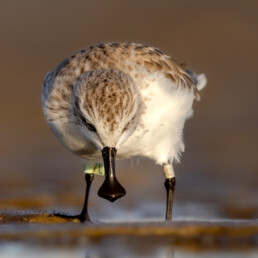
Spoonie chicks. Photo: Pavel Tomkovich
Spoon-billed sandpipers at Quanzhou Fujian province China Photo: by Huang-baotong
Photo: Daniel Pettersson
Bad News · Good News
Pulling the Spoonie away from the brink of extinction

10 years ago
25%
population decline per year
today
5%
population decline per year
Spoonies are still declining — but by 5% a year, not 25%. Ten years of work by local partners across breeding and non-breeding grounds has cut the rate of loss five-fold.
We are close to stabilizing the species. Holding that line is exactly what your adoption funds.
Migratory shorebirds largely depend on mudflats where they find food.
Photo: Sayam Chowdhury
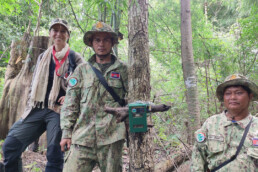
Field partners · Bangladesh, Myanmar, China, Thailand
Taking down the nets, mudflat by mudflat

Remove the mist nets

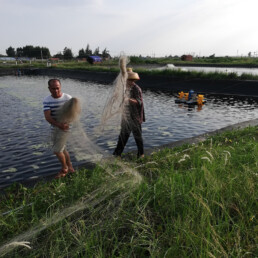
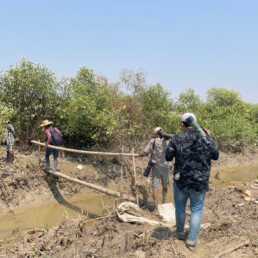
Survey teams walk the tidal flats at low water, locate nets and noose lines, and physically pull them out — poles, mesh and all — so the trap cannot be reset that evening.

Retire the hunting gear

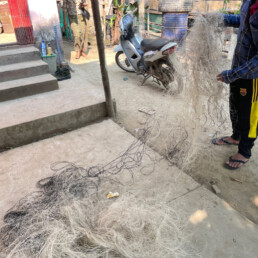
Nets are confiscated under village no-hunting bylaws and taken out of circulation. Hunters are met in person, not prosecuted from a distance — many become the flyway’s most effective informants.

Patrol the site, season after season

Local Conservation Groups walk the same flats on a schedule through the whole wintering season, logging birds as they go — so removal holds and the count tells us whether it is working.
New sites · Vietnam
The transmitters led us somewhere new

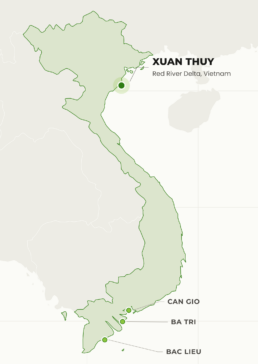
Satellite transmitters fitted by our field partners have recorded spoon-billed sandpipers on a handful of Vietnamese coastal wetlands, including parts of the coast of Hai Phong Province in northern Vietnam. Sites nobody was watching for this bird previously. Additionally a Vietnamese partner has identified new sites in southern Vietnam through direct field surveys.

These are working mudflats and shrimp-pond coastlines, with the same pressures — nets, disturbance, habitat conversion — that the flyway’s other wintering sites face. And the same remedy works: local groups surveying the flats, removing nets, and patrolling season after season.

This adoption campaign funds the start of that work in Vietnam, with Vietnamese partners — extending a model already proven in Bangladesh, Myanmar, China and Thailand.

New sites · Vietnam
The transmitters led us somewhere new

Satellite transmitters fitted by our field partners have recorded spoon-billed sandpipers on a handful of Vietnamese coastal wetlands, including parts of the coast of Hai Phong Province in northern Vietnam. Sites nobody was watching for this bird previously. Additionally a Vietnamese partner has identified new sites in southern Vietnam through direct field surveys.

These are working mudflats and shrimp-pond coastlines, with the same pressures — nets, disturbance, habitat conversion — that the flyway’s other wintering sites face. And the same remedy works: local groups surveying the flats, removing nets, and patrolling season after season.

This adoption campaign funds the start of that work in Vietnam, with Vietnamese partners — extending a model already proven in Bangladesh, Myanmar, China and Thailand.

An umbrella species
Conservation under the wings of the Spoon-billed Sandpiper

Find out how the Spoon-billed Sandpiper Task Force, including the efforts of our field partners are planning to ensure the survival and recovery of the species.
As an umbrella species, protecting the spoon-billed sandpiper's wetlands protects 33 globally threatened and near threatened species and almost half a million waterbirds alongside it.
500 birds. One flyway. One chance.

Adopt as a gift
A named bird, a certificate in their name, and updates from the flyway.

Adopt for a classroom
One bird for the whole class, plus a wall poster and a information sheet.

Adopt in someone's memory
A tribute adoption in a birder’s name, with a note to the family telling them which bird now carries it.
Help more Spoonies find adopters

There are many easy ways to find new adopters. Everything you need is in this toolkit. If something’s missing, just let us know.

Members of these organizations and businesses have adopted Spoonies.
Young artists worldwide

Kids around the world draw the Spoonie

International Conservation Fund

ICF is a registered 501(c)3 charity EIN: 83-4647086

© 2024 All rights reserved

Newsletters

Stay in touch


Privacy Preference Center