

More than 22% of the world’s Pacific American Oystercatchers now depend on Bahía de Tóbari.
When researchers from our partners Pronatura Noroeste began monitoring the area, little was known about the local breeding population. Before the islands were formed, only 15 breeding pairs were recorded in the bay.
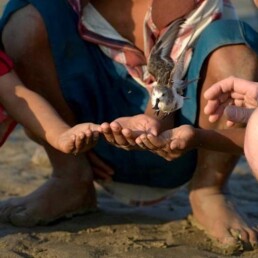
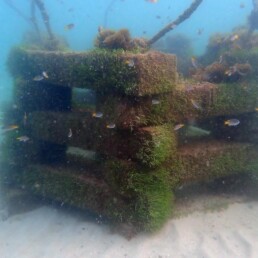
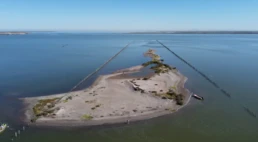
Today, more than 660 individual oystercatchers have been registered in Bahía de Tóbari—representing more than a fifth of the global population of this endangered subspecies. Most use the artificial islands for nesting.
This makes Tóbari Bay the most important breeding site for the subspecies in Mexico and second in overall importance across its range.


From just 15 breeding pairs to over 660 birds — a conservation turning point in a single decade.
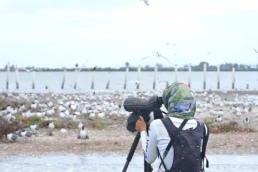
When we protect the oystercatcher, we protect an entire coastal ecosystem.
The American Oystercatcher is highly specialized, feeding almost exclusively on oysters. This makes it an ecological indicator species: if its habitat is healthy, the broader coastal ecosystem is functioning.
In Bahía de Tóbari, protecting the oystercatcher also safeguards at least ten other nesting waterbird species that share the same habitat. For this reason, it functions as an umbrella species—its conservation has cascading ecological benefits.
The islands have proven to be a reproductive stronghold. In 2025 alone:
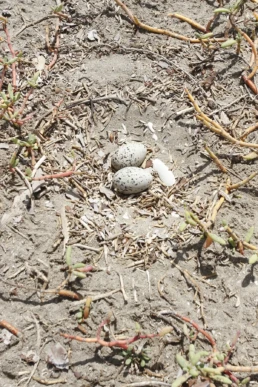
203 nests were located and monitored
More than two tons of marine debris were removed
14 breeding waterbird species were surveyed
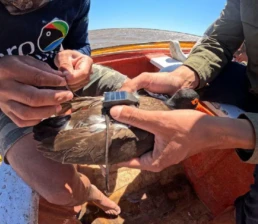
Six adults were GPS-tracked
Education programs were delivered in local schools
A community-authored training manual was developed
This is science, technology, and local stewardship working together.
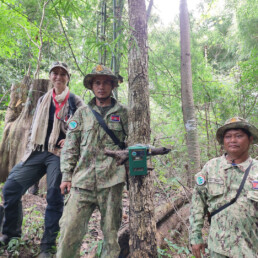
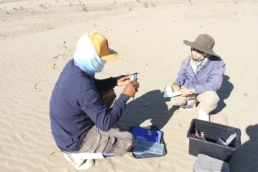
Since 2024, Pronatura Noroeste has built a long-term conservation program in partnership with the local Yoreme Mayo community. The 16-member group Promotores Ambientales de Bahía Tóbari (11 women, 5 men) participates in every stage of the project—nest monitoring, habitat restoration, data collection, workshops, and environmental education.
Despite the success, the sanctuary remains vulnerable.
Two major threats persist:
-
Predation, responsible for approximately 80% of nest failures.
-
Vegetation invasion and erosion, which reduce available nesting habitat.
Because the islands are artificial, they lack formal legal protection. They are exposed to erosion, human disturbance, and long-term degradation.
