








Recent field surveys in central Vietnam have confirmed that some of the country’s most threatened primates are still surviving in the wild — and in places where their presence had never before been officially documented.

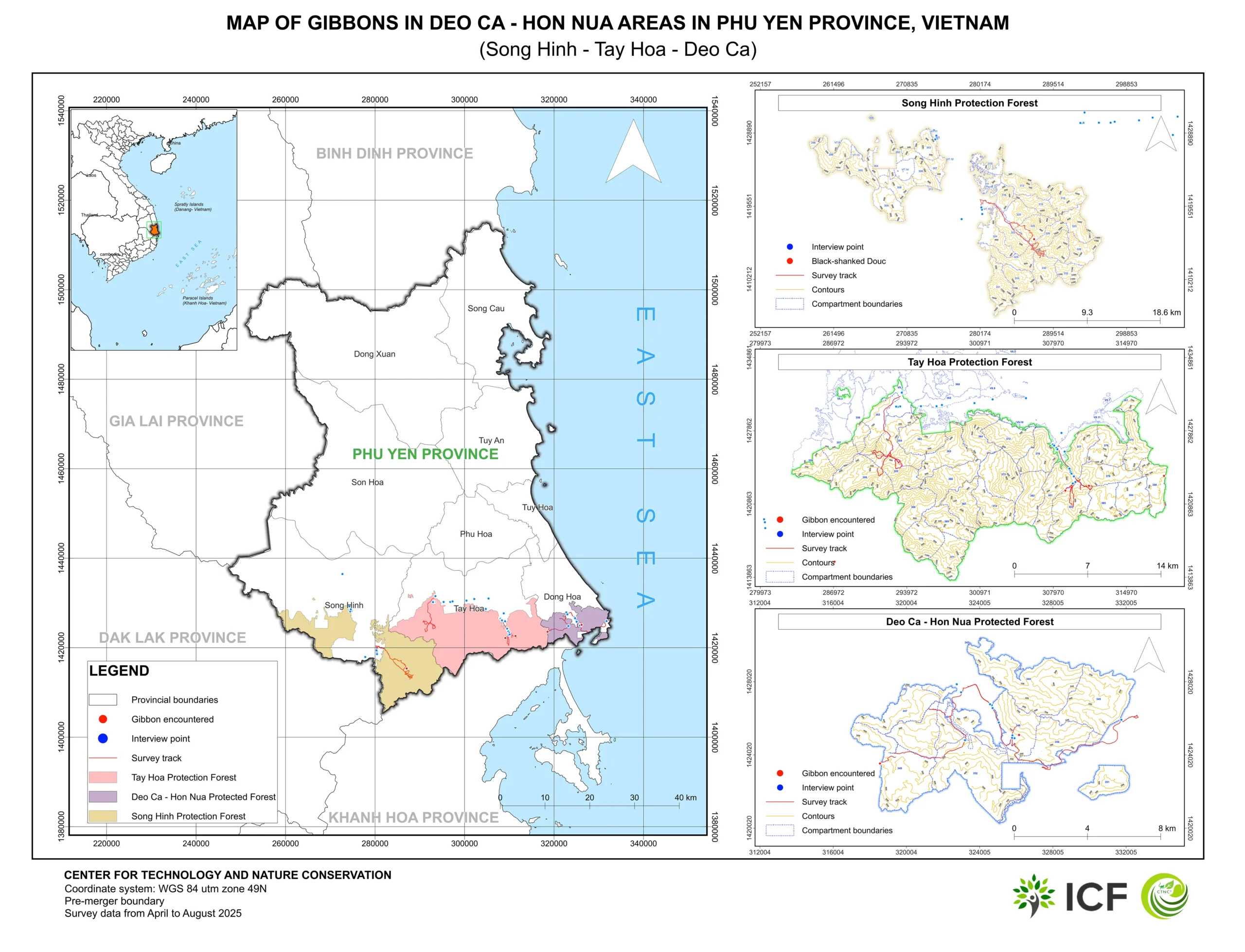
Within the contiguous forest complex of Deo Ca – Tay Hoa – Song Hinh, researchers confirmed six groups of Endangered Red-cheeked gibbons (Nomascus gabriellae), representing at least 15 individuals, and made a first-ever confirmed discovery of a group of Black-shanked douc langurs (Pygathrix nigripes) in Song Hinh Protection Forest. This finding marks the northernmost recorded distribution of the species to date.
Covering more than 154 kilometers of systematic transect surveys, the study documented primate presence primarily through early-morning vocalizations, along with feeding and resting signs concentrated in streamside and riparian habitats. These forests form a connected landscape of up to 130,000 hectares, recognized as both a Key Biodiversity Area (KBA) and an Alliance for Zero Extinction (AZE) site, underscoring their global ecological importance.
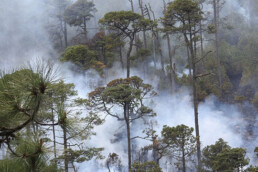
Despite this significance, the region faces persistent threats from hunting, habitat fragmentation, infrastructure development, and enforcement gaps — pressures that make these discoveries both hopeful and urgent.
Local Leadership at the Core: CTNC’s Role on the Ground
These results are the outcome of a project led by the Center for Technology and Nature Conservation (CTNC), a Vietnam-based grassroots NGO working directly with local authorities and communities to protect the country’s remaining wildlife and habitats.
Through a combination of scientific field surveys, technology-based monitoring, and community engagement, CTNC has demonstrated how locally led conservation can deliver concrete, measurable outcomes in complex and challenging landscapes.
The People Protecting the Forest: Rangers, Data, and Daily Patrols
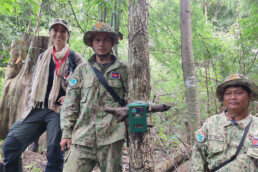
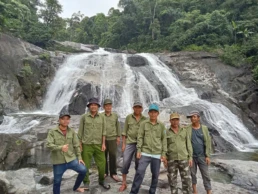
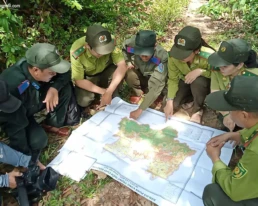
A central pillar of the project focused on improving forest protection by equipping rangers with modern monitoring tools. Between April and August 2025, CTNC conducted three SMART training courses across Deo Ca Special-use Forest, Tay Hoa Protection Forest, and Song Hinh Protection Forest, training a total of 67 forest protection staff.
The Forest Has Neighbors — and They Matter
Recognizing that conservation cannot succeed without public understanding and support, CTNC also invested in outreach and education.

Environmental education programs reached nearly 1,000 students and teachers across three secondary schools, many of whom were unaware that globally threatened primates and turtles lived in the forests surrounding their communities. At the same time, public awareness campaigns using commune loudspeaker systems reached over 10,000 local residents, delivering repeated messages on wildlife protection laws, ecological importance, and legal consequences of illegal hunting and trade.
For the first time, patrol data were systematically recorded with GPS tracks, time stamps, and standardized threat reporting — allowing forest managers to identify enforcement hotspots and respond more effectively.
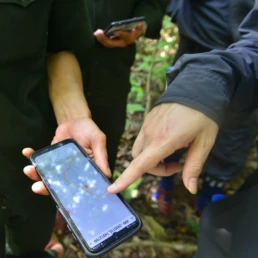
This effort moved quickly from training to real-world implementation. Following the handover of SMART-enabled mobile devices, patrol teams in Tay Hoa alone conducted:
21
patrols
46
patrol days
305.59
km covered
570
patrol hours logged
Why Local, Comprehensive Conservation Matters
Protecting Vietnam’s endangered primates is still possible — but only if these efforts are sustained and scaled. Support locally led conservation initiatives that combine science, enforcement, and community engagement to safeguard critical habitats before they are lost.
The achievements of this project — from species discoveries to improved enforcement and community engagement — were only possible because the work was led by people who understand the landscape, the species, the threats, and the social realities on the ground.
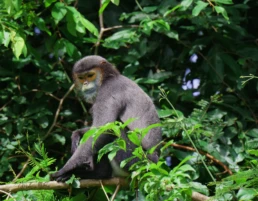
Photo by Tang A Pau